“I really don’t know life at all.”
It is fitting that I begin writing this blog post on a plane, up above the clouds, looking below from above; an opposite view from the usual below up at the shapeless forms as they shade, rain, part, and paint the sky. Joni Mitchell wrote this song on a plane, looking out at the clouds, just as I am now. She recalls:
“I was reading Saul Bellow’s “Henderson the Rain King” on a plane and early in the book Henderson the Rain King is also up in a plane. He’s on his way to Africa and he looks down and sees these clouds. I put down the book, looked out the window and saw clouds too, and I immediately started writing the song. I had no idea that the song would become as popular as it did.”
Let’s disregard the fact that I haven’t written a blog post in two and a half years. I’ve started and ended a whole job since my last blog post, lol. I’ve also lived in Rhode Island, New York, Michigan, and Colorado (yet again) since my last post. And then I’ve been busy with my new job, with consistent exercising (including running, fun!), taking a creative writing class twice a week (finally utilizing that tuition benefit lol), joining a community acapella group that rehearses after work, learning new songs on guitar, reading lots of books, and all that jazz. BUT I have been meaning to write about this song for a long time, and honestly it is about time I feature a female artist and song on this blog. It has never been intentional that all the songs I have written about so far were written and performed by male artists. It is tough because the music industry was, and still is, a male dominated industry; then, add in the fact I mostly only write about rock and folk music from the 60s/70s/80s, where female musicians and songwriters were especially underrepresented in the industry. However, it does not (and should not) diminish the immense talent that female musicians possess and the many great ways they have contributed to the industry. So, it is time we appreciate one of the many influential female artists from the 60’s: Joni Mitchell.
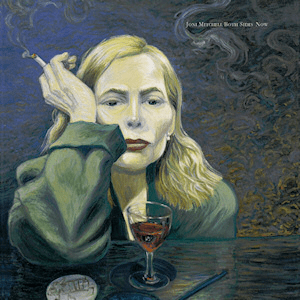
Joni Mitchell emerged in the 60’s as a folk musician, singer-songwriter, and composer. In the 70’s, she experimented with jazz influenced compositions and songs, fusing elements of jazz, folk, blues, and rock and roll. She has worked with countless artists and bands, including Bob Dylan, Neil Young, Crosby Stills & Nash, The Band, and James Taylor, to name a few. She released her second album “Clouds” in 1969 which features “Both Sides Now” as the closing track on side two. She was only 24 years old when she wrote this masterpiece. Let’s start with the lyrics:
Rows and flows of angel hair
And ice cream castles in the air
And feather canyons everywhere
I’ve looked at clouds that way
But now they only block the sun
They rain and snow on everyone
So many things I would have done
But clouds got in my way
I’ve looked at clouds from both sides now
From up and down and still somehow
It’s cloud illusions I recall
I really don’t know clouds at all
Moons and Junes and Ferris wheels
The dizzy dancing way that you feel
As every fairy tale comes real
I’ve looked at love that way
But now it’s just another show
And you leave ’em laughing when you go
And if you care, don’t let them know
Don’t give yourself away
I’ve looked at love from both sides now
From give and take and still somehow
It’s love’s illusions that I recall
I really don’t know love at all
Tears and fears and feeling proud
To say, “I love you” right out loud
Dreams and schemes and circus crowds
I’ve looked at life that way
Oh, but now old friends they’re acting strange
They shake their heads and they say I’ve changed
Well something’s lost, but something’s gained
In living every day
I’ve looked at life from both sides now
From win and lose and still somehow
It’s life’s illusions I recall
I really don’t know life at all
I see this song as being about perceptions and memories; seeing things for what we imagine them to be, and for what they really are. It is about having the perspective of both a dreamer and a realist, but recalling the memory, or the “illusion” of things in the end, either by choice or by default. As she concludes, though we can see all perspectives of things (innocence, aging, love, life, etc) in the end we may be wise enough to admit we might not always understand them. Or, that we are no longer deceived by the perception of naivety but we choose to remember these things in such a way; to preserve the childlike wonder of illusions and innocence of memories.
But that begs a question: If all is left to memory, is it all just an illusion? Or is it all real and tangible? It makes me think of the great line from Harry Potter, when the fragment soul of Voldemort that lives within Harry has died, and he is left in a limbo state between life and death. He is blinded by a white nothingness of light, and sees the bloody, frail small soul of Voldemort that has just been killed. Dumbledore appears in his sea of white, leaving him the choice to return to his life or stay in his limbo state. Harry asks him if this is all real, or just happening inside his head. Dumbeldore replies, “Of course it is happening inside your head. Why should that mean that it is not real?”
I see this song as a praise for the wisdom gained throughout life, as an ode to the gains and losses that ultimately shape who we are. I don’t necessarily see the “recalling” of clouds’, love’s, and life’s illusions as a negative thing. I see it as choosing to remember the good, choosing to feel the innocence of life, while still appreciating and understanding the realities of it. For example, the line of “ice cream castles in the air and feathered canyons everywhere” to describe the shapes and stories you make up of clouds when you are a kid, shows the magic, creativity, and naivety inside you that you are naturally born with; a stranger yet to the realities of clouds. But to contrast it with “they rain and snow on everyone, so many things I could have done but clouds got in my way,” shows the magic lost, when the realities of life turn the mythical clouds into an inconvenience, a nuisance, and a bother. But in the end, recalling (whether by choice or naturally) the illusions of the clouds shows a wisdom gained–you cannot always control the outcome of something, so you might as well look at the positives. Clouds can certainly be an inconvenience–ruining your beach plans, dumping icy snow onto the ground when you need to get to work, even causing destruction to the point where you could lose everything (think hurricanes, tornados, etc)–but they can also be beautiful and mystical forces of nature. They can offer us the most magical colors we have ever seen in the sky, they can shade us from days that are too hot to bare, they can water the plants, the grass, the trees and water us humans, too. There is so much good that can outweigh the bad, and though we may not ever fully understand them or see them for what they truly are, we can choose to remember their magic.
Aside from the beauty and genius of the lyrics, I also want to speak to the arrangement of this song. Joni strums her guitar in Open D tuning, allowing for an airy, powerful, and harmonious blend of sound. It offers the chance for the lyrics to be heard and seen, instead of overpowered by instrumentals. I think the contrast between the simple guitar and intricacy of the lyrics is very compelling, and offers the chance for the song to play out like a story book. I also just love open tuning; it allows the guitar to sound alive and full. And is a little more interesting to listen to than standard tuning.
I don’t watch the Grammy’s, I’m not really into pop culture in the slightest and can’t keep up with it all. But apparently she sang this at the Grammy’s this month, so I hope that performance opened up the song to those who have never heard it before. And I think I will watch it because it was said to be a really great performance, which I don’t doubt. It really is a beautiful song, one that will stick with me forever, and I can only hope everyone listens to it at least once in their life. I will say, I am keen to Joni’s original 1969 studio version, though she recorded a 2000 version as well. I suggest listening to the original first. It is interesting to hear her different interpretations of the song, one from when she was younger and the other from when she has grown older and experienced more life. There is certainly a depth to the song that can be brought from the perspective of someone who has seen the years go by. I wonder how Joni feels, singing a song she wrote at 24, now at the age of 80; a song about life and love and memories and perspectives, at that. Hope? Relief? Grief? Does she feel she truly has seen life from “both sides” now?
I’ll leave you with my favorite line from the song:
Well something’s lost, but something’s gained
In living every day
-Hana


This was a beautiful tribute to my all time favorite artist! I never knew she wrote it on a plane – loved learning something new about Joni. I also prefer the original though I’m always amazed how her vocal range became contralto later in life – truly gives another depth to the song along with her life experience. Hope you’re doing well, Hana!
LikeLike
Thank you so much Emily! And yes her range is insane!! Hope you are doing well too :))
LikeLike